







Looking for Timber Window Well Solutions in Erie, CO?
Thinking about timber window wells in Erie? Learn what makes them work, what to avoid, realistic costs, and how to get them installed correctly the first time.
Erie has seen a lot of growth over the past decade, and with that growth comes a mix of newer builds and older homes with basements that weren’t designed with today’s expectations in mind. Some homeowners here are putting in window wells for the first time on a newly dug out basement space. Others are replacing failed wells that were installed years ago with materials that didn’t hold up. Either way, the conversation about timber window wells keeps coming up because wood looks natural, fits the aesthetic of Erie’s neighborhoods, and costs less upfront than some alternatives.
The question worth asking before you commit to timber is whether the investment will last. Colorado’s climate is harder on wood than most people expect. High UV at elevation, wet springs, hard freezes, and the clay-heavy soil that a lot of Erie sits on all work against timber that wasn’t selected and installed with those conditions in mind. Done right, a timber well looks great and lasts for years. Done wrong, it’s a redo project within three to five seasons.
Window Well Guardian has worked with homeowners across Boulder and Weld County on timber window well projects, and here’s the honest picture of what the job involves and what makes it succeed.
What Makes Timber Window Wells Different From Metal
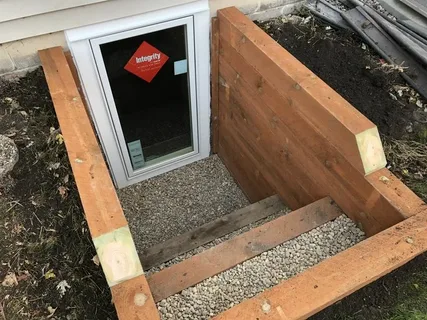
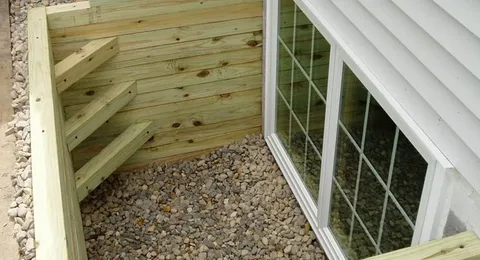
Timber wells have a warmth and character that metal corrugated wells don’t. They blend with natural landscaping, work well alongside wood fencing or raised garden beds, and can be built to non-standard sizes without special fabrication. A well-built timber well in a natural landscape looks like it belongs there. That aesthetic value is real and it’s why homeowners choose wood even when they know the maintenance picture is more demanding. The trade-off compared to metal is longevity and maintenance. Galvanized steel doesn’t rot. Treated timber, when properly maintained, can last fifteen to twenty years — but it requires attention that metal doesn’t. For homeowners who are prepared for that and prefer the look, timber is a legitimate choice.
Timber Selection: The Decision That Determines Everything
The type of timber used is more important than any other decision in a timber window well project. Ground contact is the relevant standard. Wood that touches soil needs to be rated for ground contact use — UC4B or UC4C pressure-treated lumber is the minimum for any part of the well that will be at or below grade. Cedar and redwood are naturally rot-resistant and are excellent choices for the portions of the well that sit above grade, but they still benefit from a penetrating exterior oil or sealant applied during construction. Railway sleepers and landscape timbers are popular for their appearance, but many are treated with creosote or other preservatives that are not safe near foundation openings or in areas where people might contact them regularly. Check the treatment type before using any reclaimed timber.
Drainage: The Invisible Factor That Determines Longevity
A timber window well without proper drainage is a timber well that will fail faster than it should. Water needs somewhere to go other than sitting against the wood and the foundation wall. The standard setup is a gravel drainage bed at least six inches deep, using washed pea gravel or river rock, at the base of the well. In Erie’s clay-heavy soils, which hold water longer than sandy soils, eight to twelve inches of gravel is often better. If the site conditions are poor and water consistently accumulates, a perforated drain pipe connected to a French drain or a sump system is worth adding. According to the International Building Code, drainage from basement window wells is a code requirement for a reason — it protects both the window and the foundation wall from moisture damage that compounds over time.
What Timber Window Wells Cost in Erie CO
These are current market ranges for Boulder and Weld County.
| Option | Typical Cost Range | Notes |
| DIY treated timber well | $100 – $300 materials | Tools and time not included |
| DIY cedar well with sealant | $200 – $450 materials | Better appearance, longer service life |
| Professional timber well installation | $400 – $800 | Includes drainage and anchoring |
| Professional metal well (comparison) | $200 – $500 | Lower maintenance over time |
| Window well cover add-on | $75 – $250 | Polycarbonate, strongly recommended |
| Drainage gravel (if separate) | $50 – $150 | Often underestimated in DIY budgets |
Homeowners searching for best timber window well installation in Erie should get quotes that include drainage setup and anchoring as line items, not as afterthoughts. Those two components are what separates a well that holds up from one that needs replacing in a few years.
Anchoring Timber Wells to the Foundation
This step gets skipped more than it should. A timber well that’s just sitting against the foundation without being fastened to it will shift when the soil freezes and expands in winter. Erie’s freeze-thaw cycles are real and they move things.
The anchoring method depends on the well design. Bolts through the back wall into masonry anchors is the standard approach. For taller wells, horizontal bracing on the sides adds stability against soil pressure.
Timber window wells in Erie that are properly anchored with galvanized or stainless steel fasteners stay in position through multiple seasons of freeze-thaw movement. Standard steel fasteners rust at the contact point with treated timber, which accelerates corrosion and loosens the anchor over time.
Erie’s Egress Requirements and What They Mean for Timber Wells
If the window the well serves is in a basement bedroom, it needs to meet IRC egress minimums — at least 9 square feet of clear floor area, minimum 36 inches of width, and a built-in ladder if the well is deeper than 44 inches. Timber wells can meet all of these requirements but have to be designed for them from the start. A well built to the wrong dimensions for an egress window affects whether the basement room can legally count as a bedroom at appraisal and at sale.
Closing Thoughts
Timber window wells in Erie work well when the right wood is used, drainage is set up correctly, and the well is anchored so it doesn’t shift over time. The aesthetic argument for timber is real in this community, where natural materials fit the character of the neighborhoods. The maintenance commitment is also real, and homeowners who go into the project knowing that and planning for it get the best long-term results. For any homeowner in Erie who’s planning a timber well project, talking through the drainage and anchoring details before buying materials is worth the time. Window Well Guardian serves Erie and the surrounding Boulder and Weld County area with window well installation, timber well projects, and egress solutions. Reach out before you start digging.
FAQs
How long do timber window wells last in Erie CO?
A properly built timber window well using ground-contact-rated pressure-treated lumber or naturally rot-resistant cedar, with a proper gravel drainage bed and regular maintenance, can last fifteen to twenty years in Erie’s climate. The biggest factors that shorten timber well life are using the wrong wood, skipping drainage so water sits against the base of the well, and not resealing the wood every three to five years as the original finish weathers. Erie’s UV exposure at elevation and the wet springs from Front Range snowmelt both accelerate degradation in wood that isn’t maintained. A timber well that gets annual inspection and prompt resealing when the finish starts to wear through will significantly outlast one that’s left to fend for itself after installation.
Do I need a permit for a timber window well installation in Erie CO?
Installing or replacing a window well without changing the window opening itself generally doesn’t require a permit in Erie or unincorporated Weld County. Projects that involve enlarging the window opening for egress, cutting new openings in the foundation, or any structural modification to the foundation wall do require permits. If you’re unsure whether your project crosses into permit territory, a call to the Town of Erie Building Division or Weld County Building Department before starting is the right move. Permitted egress projects require inspections that confirm the well meets IRC dimensions, which protects both the safety of the occupants and the legal status of the bedroom.
What’s the best way to maintain a timber window well in Erie CO?
Inspect the well annually, ideally in early spring after the frost season ends. Look for soft spots in the wood, which indicate rot starting. Check the sealant or finish on all exposed surfaces and reapply when it starts to gray or peel rather than waiting until it’s fully worn off. Clear the gravel drainage bed of debris that accumulates over fall and winter. Check the anchoring fasteners for any signs of rust or loosening and tighten or replace as needed. If the well has a cover, inspect the cover mounts and the cover itself for cracks or damage. Address small problems as soon as they show up — a soft spot caught early can be treated or a single board replaced. Left unaddressed, rot spreads through the structure and turns a minor repair into a full replacement.
Can timber window wells be used for egress windows in Erie CO?
Yes, but they have to be sized correctly to meet IRC egress requirements. The well needs to provide at least 9 square feet of clear floor area, be at least 36 inches wide, and include a ladder or steps built into the well if it’s more than 44 inches deep. Timber wells built to these dimensions work fine structurally for egress applications. The additional consideration is longevity — an egress well is part of an emergency exit system, and a well that’s rotting or has shifted out of its original position may no longer meet the dimensional requirements it was installed to. For egress applications specifically, checking the well dimensions and structural condition as part of your annual inspection is worth doing.
How do I stop water from collecting in my timber window well in Erie CO?
Start by checking whether the well has a gravel drainage bed at all. Many wells — especially older ones or DIY projects — were installed without drainage gravel, and that’s the most common cause of persistent water in a well. If there’s no gravel, excavating the base and adding six to twelve inches of washed gravel is the fix. If there is gravel but water still pools, the gravel may be compacted or clogged with fine soil particles and needs to be replaced. Check that the top of the well rim is at least six inches above grade so surface runoff isn’t flowing in over the top. A polycarbonate dome cover is the simplest solution for keeping rain and snowmelt out of the well entirely, and for most Erie homeowners it’s worth the cost regardless of what other drainage measures are in place.
