







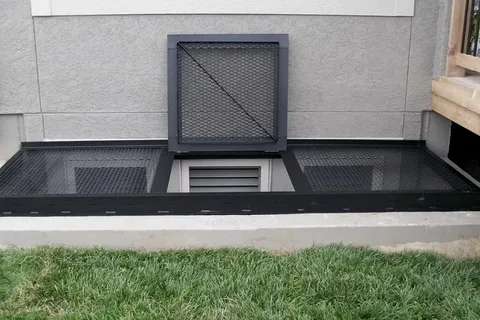
Need Reliable Metal Window Well Services in Broomfield, CO?
Need metal window wells in Broomfield? Learn about materials, sizing, drainage, installation, and what makes a window well actually work long term.
Window wells don’t get much attention until something goes wrong. Water sitting against the foundation after a heavy rain. A basement window that fogs up every spring. Soil pressing against the glass after a hard winter. By the time most homeowners in Broomfield start paying attention to their window wells, the problem has already been developing for a while.
Metal window wells, when they’re the right size, properly installed, and paired with good drainage, solve these problems before they start. They hold back soil, allow light into below-grade spaces, provide emergency egress when required by code, and create a barrier between the basement window and whatever weather Colorado decides to throw at the house this week.
Broomfield gets real weather. Snow loads in winter, heavy rain in spring, intense sun in summer, and freeze-thaw cycles that move soil in ways that poorly installed window wells can’t handle. If you’re looking at a window well project here — whether that’s replacing something old and corroded or installing on a new window opening — knowing what actually matters is worth your time.Window Well Guardian works with homeowners across the Front Range on exactly these projects, and here’s what we know about getting it right in this climate.

Why Metal Window Wells Outperform Other Materials in Colorado
Metal window wells hold up to Colorado’s climate better than most alternatives. Galvanized steel and aluminum both resist the freeze-thaw cycling that cracks plastic wells over time. Plastic wells look fine at first but become brittle in UV exposure, which Colorado’s high-altitude sun accelerates significantly compared to lower-elevation states. A plastic well that holds up in Virginia for fifteen years might show cracking and degradation in Broomfield in five. Metal doesn’t have that problem. Corrugated steel wells are the workhorse option — affordable, durable, widely available. Aluminum wells cost more but don’t rust at all, which matters in areas with soil that retains moisture or where irrigation runoff consistently contacts the well.
Sizing: The Part Most People Get Wrong
Window well sizing is where a lot of installations fall short, and the consequences show up either as egress code failures or as wells that feel like small dark pits rather than functional basement openings. The width should extend at least six inches beyond the window on each side. The depth from the well wall to the foundation wall needs to be at least eight inches — more is better for light and usability. The well should extend at least six inches above grade so surface water has to work hard to get over the rim rather than flowing directly in. For egress windows specifically, the IRC requires a minimum opening of 9 square feet, a minimum width of 36 inches, a minimum height of 24 inches, and a maximum sill height of 44 inches from the floor. These aren’t suggestions. They’re code minimums that inspectors enforce.
Drainage Is What Makes or Breaks a Window Well
A metal window well without proper drainage is just a metal bowl that collects water against your foundation. The drainage system is what actually makes the well function as designed. The standard approach is a gravel bed at the base of the well, typically 6 to 12 inches deep, that allows water to percolate down and away from the foundation rather than pooling. If the soil drainage is poor — which is common in parts of Broomfield with clay-heavy soils — a drain pipe connected to a French drain or daylight drain may be needed. Covers are another option. Clear polycarbonate window well covers keep rain and snow out of the well entirely, which is the simplest drainage solution there is. They also keep kids and pets from falling in, which is a practical safety benefit that most families with children eventually think about.
What Metal Window Wells Cost in Broomfield
These are current market ranges for this area.
| Well Type | Typical Installed Cost | Notes |
| Standard corrugated steel well | $150 – $350 installed | Most common residential option |
| Heavy-gauge galvanized steel | $250 – $500 installed | Better for deep or large openings |
| Aluminum well | $300 – $600 installed | Rust-free, good for wet locations |
| Custom-sized metal well | $400 – $900+ installed | Non-standard sizes or shapes |
| Window well cover (add-on) | $75 – $250 | Polycarbonate, clear or tinted |
| Drainage gravel installation | $100 – $300 | Depends on depth and access |
Homeowners looking for best metal window wells for basements in Broomfield should get written quotes that include the drainage component, not just the well itself. A well installed without addressing drainage is a partial solution at best.
Egress Windows and Window Wells in Broomfield Homes
If any bedroom in your basement doesn’t have a window that meets egress requirements, that bedroom isn’t legally a bedroom. This matters for everything from home sales to insurance to emergency evacuation. Broomfield follows the International Residential Code for egress window requirements, and the window well is part of the egress system.
The well has to be large enough that a person can climb out of it — minimum 9 square feet of clear floor area, and a ladder built in if the well is deeper than 44 inches. A lot of older Broomfield homes have small basement windows that were never sized for egress.
Metal window wells in Broomfield for egress applications typically involve enlarging the window opening, installing a proper egress window, and pairing it with a correctly sized well. It’s not a trivial project, but it matters for safety and for how the home appraises and sells.
How to Choose the Right Window Well for Your Broomfield Home
The right well size, material, and installation approach depend on the specific window opening, the soil conditions, how the grade slopes toward the foundation, and whether the opening needs to meet egress code. What matters most is choosing a product rated for the soil load it will face and installing it with proper drainage so water doesn’t accumulate. A well that’s too lightweight gets pushed in by soil pressure over time, and a well without good drainage becomes a water problem rather than a solution to one.
Closing Thoughts
Metal window wells are one of those home components that most people don’t think about until something goes wrong. When they’re sized right, installed correctly, and have proper drainage, they just work. Basement spaces stay dry. Light gets in. Emergency egress is available when needed. And the foundation stays protected from the kind of persistent moisture contact that causes serious problems over years. For any homeowner in Broomfield who’s dealing with an aging well, a water problem in a basement window area, or a basement bedroom that doesn’t meet egress code, getting a proper assessment from someone who knows this product category is the right first step. Window Well Guardian serves the Broomfield area and the broader Front Range with metal window well installation, replacement, and egress window well solutions. Reach out today.
FAQs
How long do metal window wells last in Broomfield CO?
Galvanized steel wells typically last 20 to 30 years in Colorado’s climate when properly installed and maintained. Aluminum wells last longer and don’t rust at all, which is why they’re worth the higher upfront cost in locations with persistent moisture or heavy irrigation. The factors that shorten well life are soil acids, poor drainage that keeps the base of the well constantly wet, and salt from winter ice melt products spreading into the well area. Keeping the well clear of debris, making sure drainage is working, and avoiding salt-based ice melt products near the well all extend service life significantly.
Do I need a permit for window well installation in Broomfield CO?
Installing or replacing a standard window well without changing the window opening generally doesn’t require a permit. Projects that involve enlarging a window opening for egress, cutting new openings in the foundation, or modifying the structural framing around a window do require permits from the City of Broomfield or Broomfield County. If the project is an egress upgrade that changes the window size, a permit is required and the installation needs to meet IRC egress requirements. When in doubt, a quick call to Broomfield’s building department confirms what your specific project requires.
What’s the right depth for a window well in Broomfield?
The well should extend at least six inches above the finished grade on the outside, which means the total depth depends on how far the window sill sits below grade. For a typical basement window where the sill is 12 to 18 inches below grade, a total well depth of 18 to 24 inches is typical. For egress windows where code requires the sill to be no higher than 44 inches from the basement floor, the well may need to be quite deep, and wells deeper than 44 inches require a built-in ladder or step system for safe egress. Colorado’s freeze-thaw cycling also means deeper wells with more gravel drainage tend to perform better long-term than shallow wells with minimal drainage.
Can I install a metal window well myself in Broomfield CO?
A straightforward replacement of a damaged well with a same-size new well is something a careful homeowner with basic tools can handle. The key steps are digging out enough space around the old well, connecting the new well to the foundation at the right anchor points, and reestablishing the gravel drainage bed. Where DIY gets riskier is in new installations, egress well projects, or situations where the drainage needs to be redesigned. Getting the drainage wrong is the most common installation mistake, and it’s one that doesn’t become obvious until the next heavy rain season. If you’re not confident about the drainage component, having a professional handle that part while you do the physical excavation is a reasonable approach.
How do I know if my existing window well is causing water problems in Broomfield?
Check the well after a heavy rain. If water is standing in the well rather than draining away within a few hours, the drainage is failing. Check the window frame and the wall below the window inside the basement — efflorescence (the white chalky mineral deposit that forms on concrete), staining, or dampness near that window wall indicates water has been getting in. If the well is cracked, pushed in, or has soil getting over the rim, those are visible signs of a well that needs replacement. A well that was installed without gravel drainage — just soil at the bottom — almost always develops problems over time in Colorado’s wet springs.
